

Hey there! I'm a supplier of Marine Loading Arm QCDC (Quick Connect/Disconnect Coupling). Today, I wanna chat about whether our Marine Loading Arm QCDC can be integrated with other systems.
First off, let's understand what Marine Loading Arm QCDC is. It's a crucial component in the marine loading and unloading process. It allows for quick and safe connection and disconnection of hoses or pipes when transferring various liquids like oil, LNG (Liquefied Natural Gas), and LPG (Liquefied Petroleum Gas) between ships and storage facilities. You can check out more about LNG Marine Loading Arm, Oil Marine Loading Arm, and LPG Marine Loading Arm on our website.
Now, back to the main question: Can it be integrated with other systems? The short answer is yes, and here's why.
Integration with Monitoring Systems
One of the most common integrations is with monitoring systems. These systems are used to keep an eye on things like pressure, temperature, and flow rate during the loading and unloading process. Our Marine Loading Arm QCDC can be easily connected to these monitoring systems.
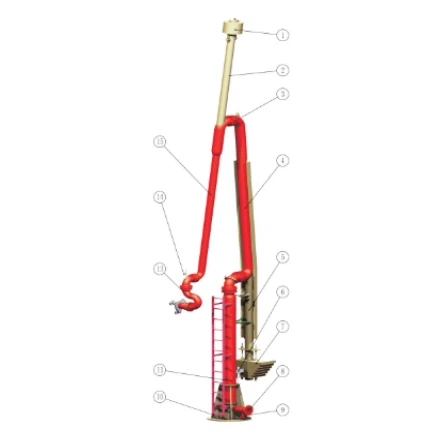
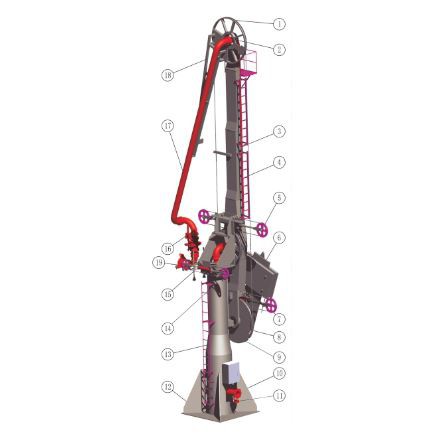
For example, by integrating with a pressure - monitoring system, we can ensure that the pressure within the loading arm and the connected hoses stays within a safe range. If the pressure gets too high, the monitoring system can send an alert, and the QCDC can be quickly disconnected to prevent any potential damage or accidents. This kind of integration is super important for maintaining the safety and efficiency of the entire loading operation.
Integration with Control Systems
Control systems are another area where our Marine Loading Arm QCDC can be integrated. These systems are used to automate the loading and unloading process. By integrating the QCDC with a control system, we can program the connection and disconnection process to happen at specific times or under certain conditions.
Let's say we have a ship that needs to be loaded with a specific amount of oil. The control system can be set to start the loading process when the ship is in the right position and the QCDC is properly connected. Once the desired amount of oil has been transferred, the control system can then trigger the disconnection of the QCDC. This not only saves time but also reduces the risk of human error.
Integration with Safety Systems
Safety is always a top priority in the marine industry. Our Marine Loading Arm QCDC can be integrated with various safety systems. For instance, it can be connected to a fire - detection system. If a fire is detected in the vicinity of the loading arm, the safety system can automatically trigger the disconnection of the QCDC to prevent the spread of the fire through the hoses.
It can also be integrated with emergency shutdown systems. In case of an emergency, such as a power failure or a major equipment malfunction, the emergency shutdown system can quickly disconnect the QCDC to stop the flow of the liquid and minimize the potential damage.
Technical Considerations for Integration
Of course, integrating the Marine Loading Arm QCDC with other systems isn't always a walk in the park. There are some technical considerations that need to be taken into account.
Compatibility
The first thing is compatibility. The QCDC needs to be compatible with the other systems in terms of communication protocols, electrical signals, and mechanical connections. We've designed our QCDC to be as flexible as possible, so it can work with a wide range of monitoring, control, and safety systems. But before any integration, it's important to do a thorough compatibility check.
Installation and Configuration
Proper installation and configuration are also crucial. The QCDC needs to be installed correctly so that it can communicate effectively with the other systems. This may involve running cables for electrical connections, setting up software parameters, and testing the integration to make sure everything works as expected.
Maintenance and Support
Once the integration is done, regular maintenance and support are needed. This includes checking the connections, updating the software, and troubleshooting any issues that may arise. We offer comprehensive maintenance and support services to ensure that the integrated systems continue to work smoothly.
Benefits of Integration
The benefits of integrating our Marine Loading Arm QCDC with other systems are numerous.
Improved Safety
As mentioned earlier, integration with safety systems can significantly improve the safety of the loading and unloading process. By quickly responding to emergencies and potential hazards, we can prevent accidents and protect the environment.
Increased Efficiency
Integration with control and monitoring systems can also increase the efficiency of the operation. Automated processes mean less manual labor, faster loading and unloading times, and better overall productivity.
Cost Savings
In the long run, integration can lead to cost savings. By preventing accidents and reducing downtime, we can save on repair costs and lost production time. Also, the improved efficiency can result in lower labor costs.
Real - World Examples
Let's take a look at some real - world examples of how our Marine Loading Arm QCDC has been integrated with other systems.
There was a large oil terminal that integrated our QCDC with their existing monitoring and control systems. Before the integration, the loading process was mostly manual, which was time - consuming and prone to errors. After the integration, the terminal was able to automate the entire loading process. The monitoring system could detect any issues in real - time, and the control system could adjust the flow rate and trigger the connection and disconnection of the QCDC as needed. As a result, the loading time was reduced by almost 30%, and the number of accidents related to the loading process dropped significantly.
Challenges in Integration
While the benefits are great, there are also some challenges in integrating the Marine Loading Arm QCDC with other systems.
Complexity
The integration process can be quite complex, especially when dealing with multiple systems. Coordinating the communication between different components and ensuring that they all work together seamlessly can be a headache.
Resistance to Change
Some operators may be resistant to change. They may be used to the old - fashioned way of doing things and may be hesitant to adopt new integrated systems. Overcoming this resistance requires proper training and education about the benefits of integration.
Conclusion
In conclusion, our Marine Loading Arm QCDC can definitely be integrated with other systems, and there are many good reasons to do so. Whether it's for safety, efficiency, or cost - savings, integration offers a lot of advantages.
If you're in the market for a reliable Marine Loading Arm QCDC and are interested in integrating it with your existing systems, we'd love to hear from you. We have a team of experts who can help you with the integration process, from compatibility checks to installation and maintenance. So, don't hesitate to reach out and start a conversation about how we can work together to improve your marine loading and unloading operations.
References
- "Marine Loading Arm Technology: Principles and Applications" - A technical guidebook on marine loading arm technology.
- Industry reports on safety and efficiency improvements in marine loading operations through system integration.