


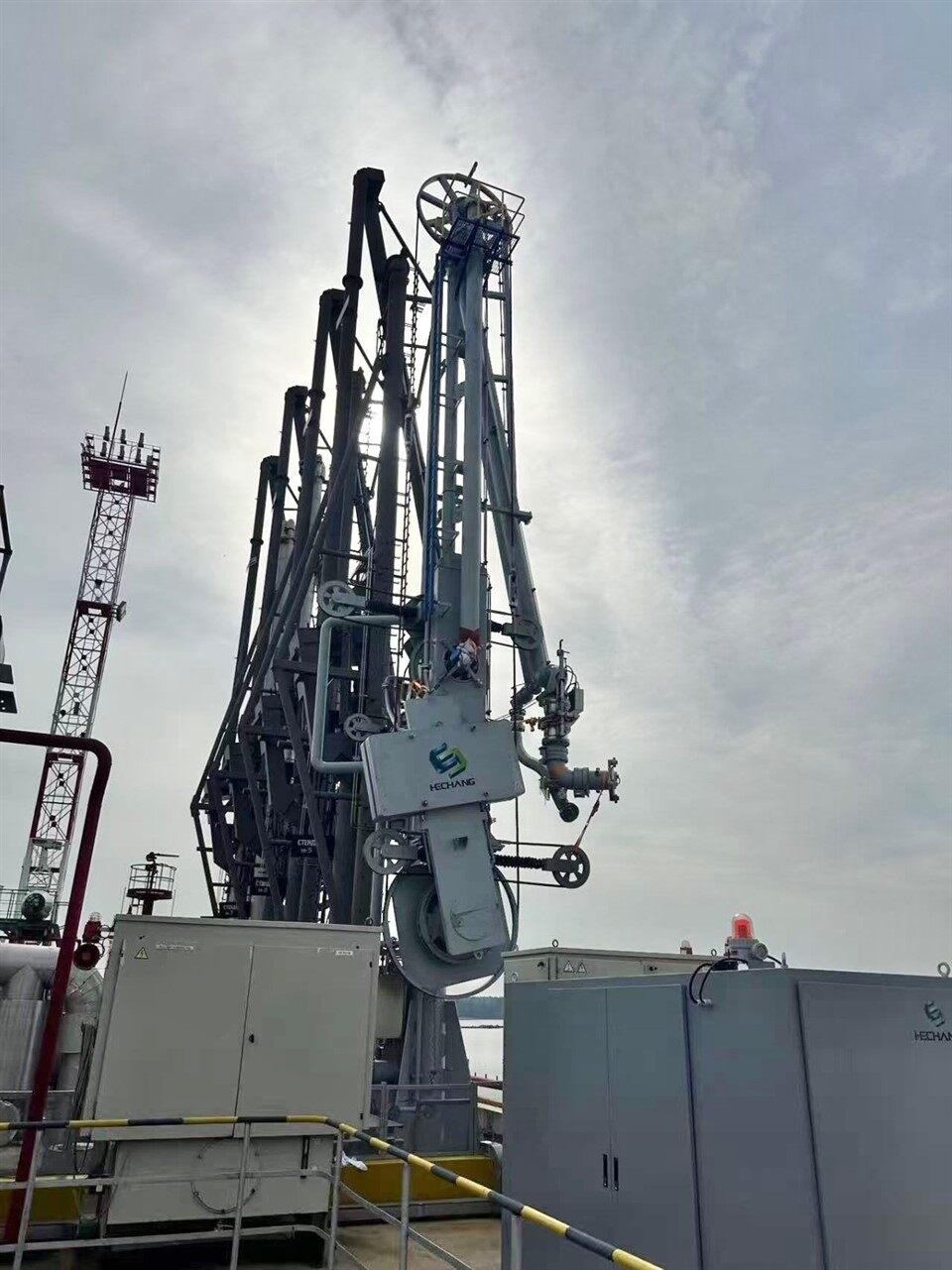
I. Marine Loading Arm
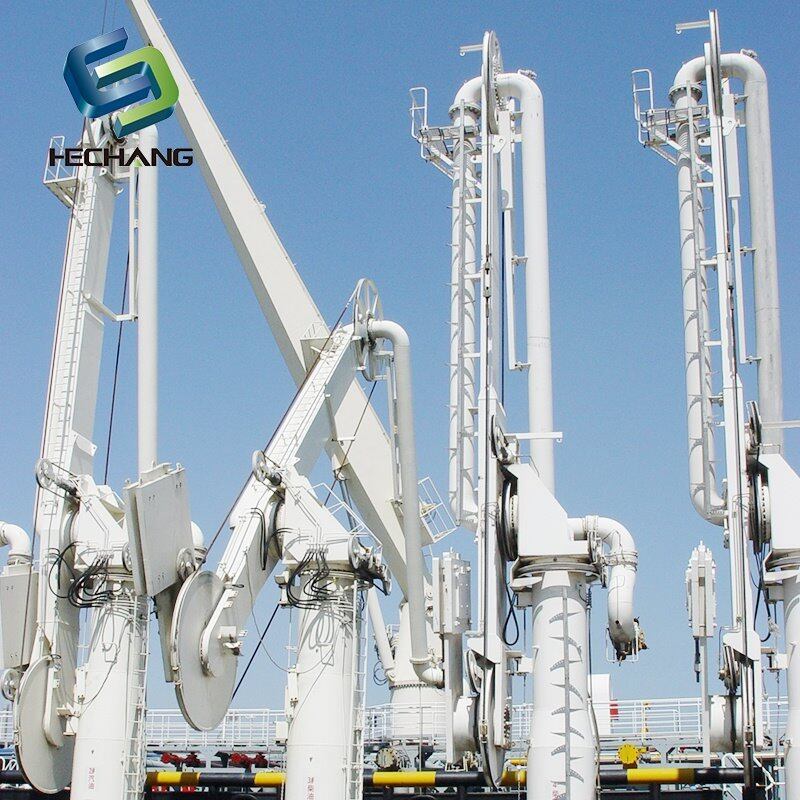
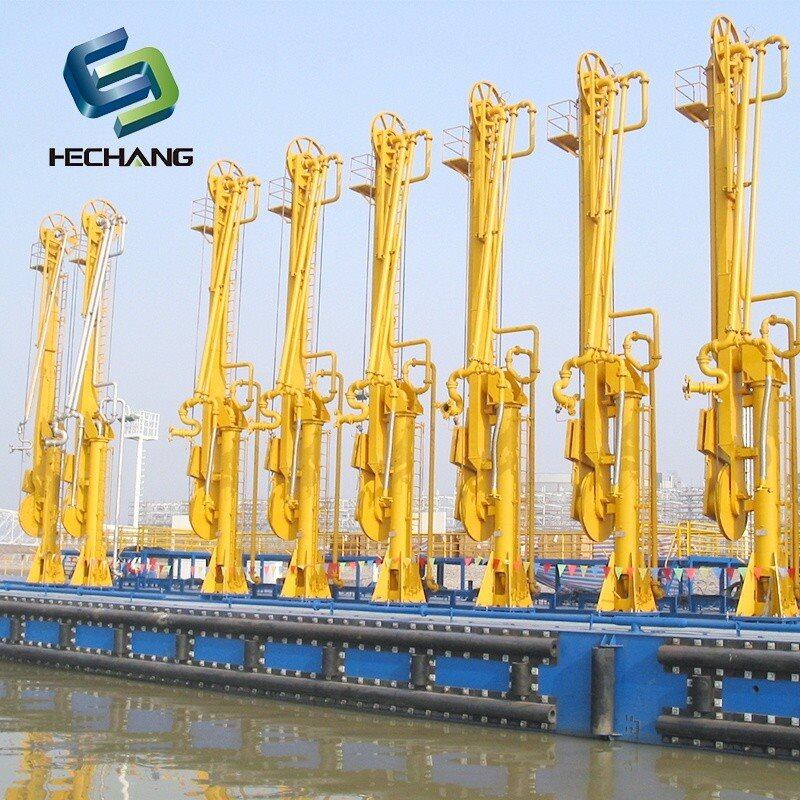
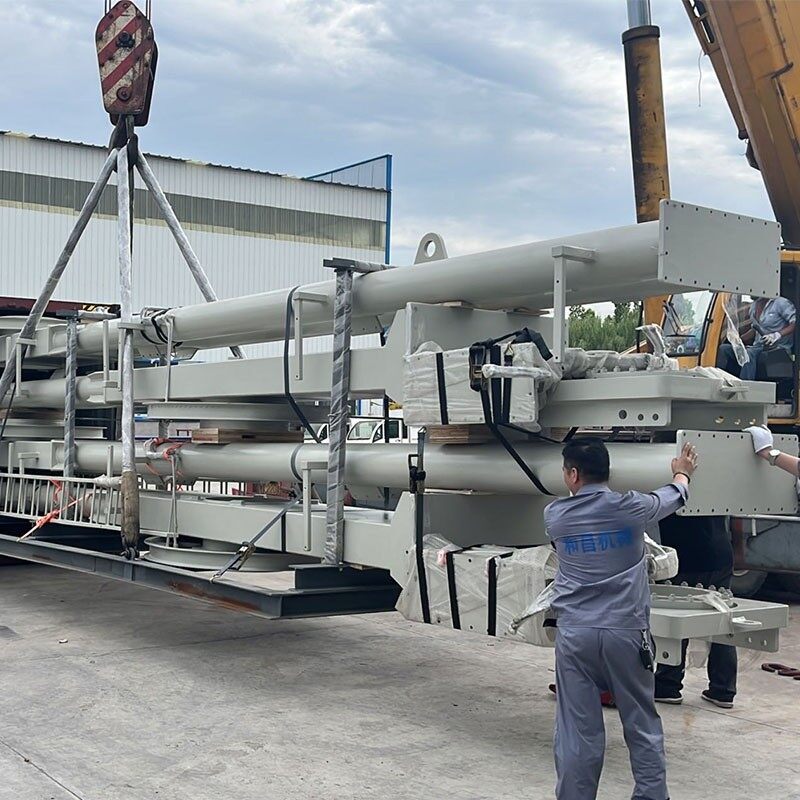
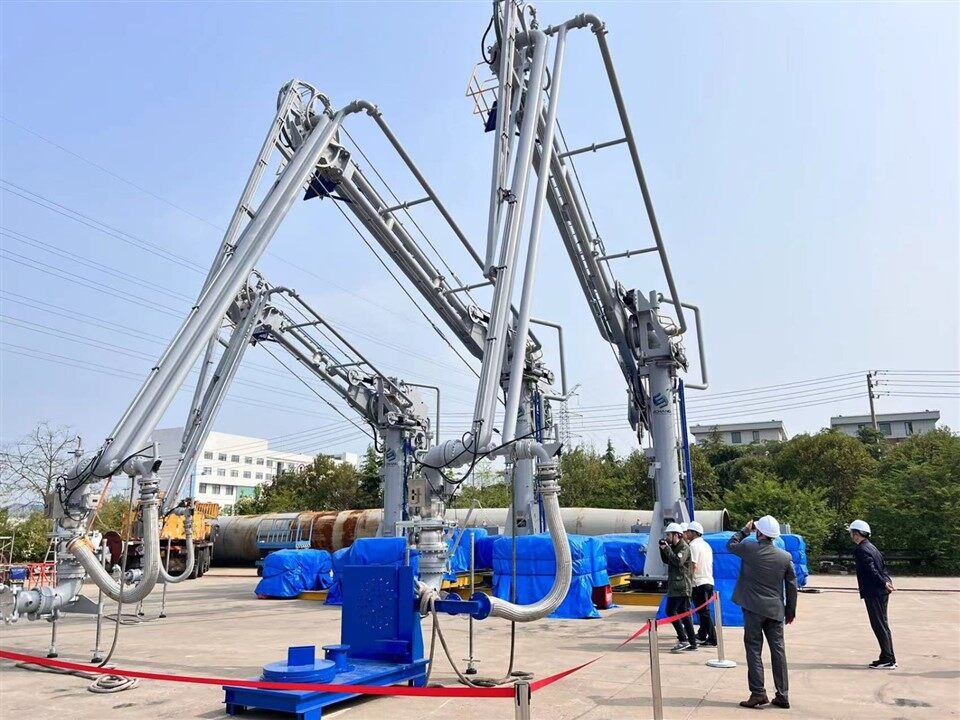
The marine loading arm is a specialized device for transferring liquids or gases between a jetty and a tanker vessel. It is composed of pipelines connected by swivel joints, enabling the safe and efficient transfer of crude oil, refined products, liquefied gas, and chemical media. With flexible movement, excellent sealing performance, and adaptability to tidal variations and harsh marine conditions, it is an essential piece of equipment for modern terminals.
II. Structure and Components
Column and Support:
Self-supporting structure that bears the weight of the arm, wind loads, and the fluid, while also serving as the fluid channel.
01
Inner Arm and Outer Arm:
Connected by multi-directional swivel joints, ensuring flexible movement and adaptation to vessel drift.
02
Swivel Joints:
Key sealing components designed for high sealing performance, resistant to high/low temperatures and corrosive media.
03
Balancing System:
Main and secondary counterweights make operation easy and allow automatic return when unloaded.
04
Operating Mode:
Depending on size and load, the arm can be operated manually or by electro-hydraulic drive.
05

III. Key Features
Excellent Follow-Up Performance: The arm can move freely within the normal drift range of the vessel, ensuring continuous transfer.
Multiple Material Options: Available in carbon steel, stainless steel, or PTFE-lined steel, to meet different media and temperature requirements.
High Adaptability: Suitable for cryogenic liquids , high-temperature media, and corrosive chemicals.
Economic and Flexible: Provides a cost-effective solution for manual operation, while also offering electro-hydraulic control for large professional terminals.

IV. Safety Systems
Emergency Release System (ERS): Automatically shuts off the fluid and quickly disconnects when vessel drift exceeds limits, preventing leakage.
Alarm and Monitoring: Optional Position Monitoring System (PMS) provides real-time arm status and triggers alarms when limits are exceeded.
V. Technical Parameters
Nominal Diameter: DN100 ~ DN400
Design Temperature: -196°C ~ +300°C
Design Pressure: -0.095 MPa ~ 6.0 MPa
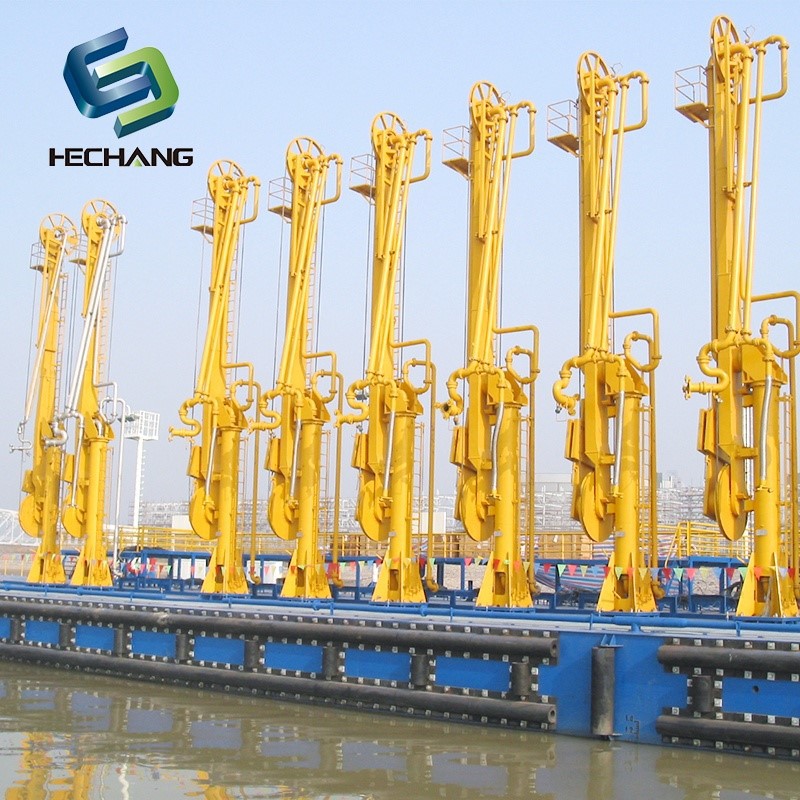
VI. Applications
Oil and chemical product transfer at ports
LNG and cryogenic liquefied gas transfer
Petrochemical storage and transportation facilities
Safe and efficient transfer of various liquids and gases


