


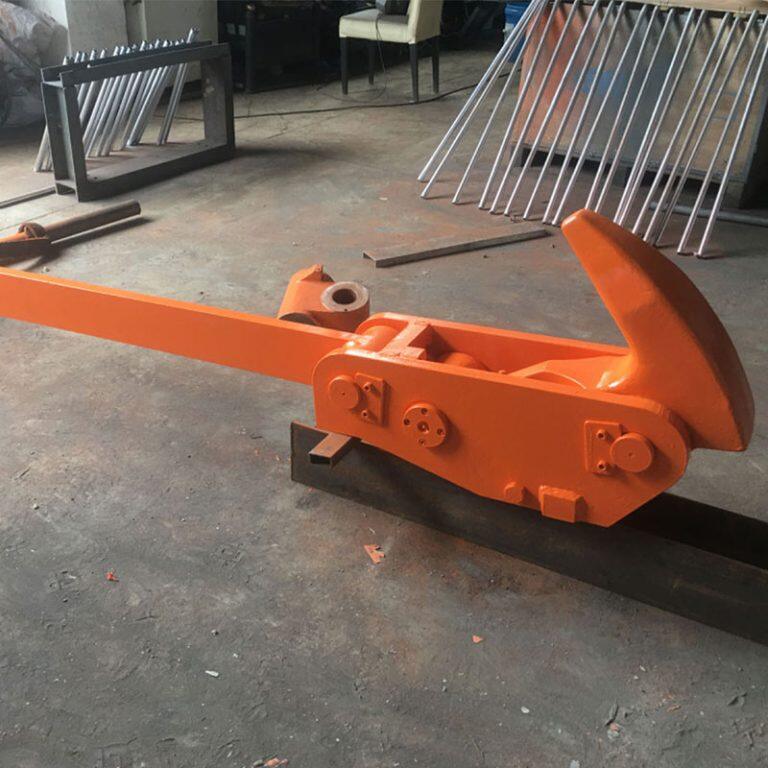
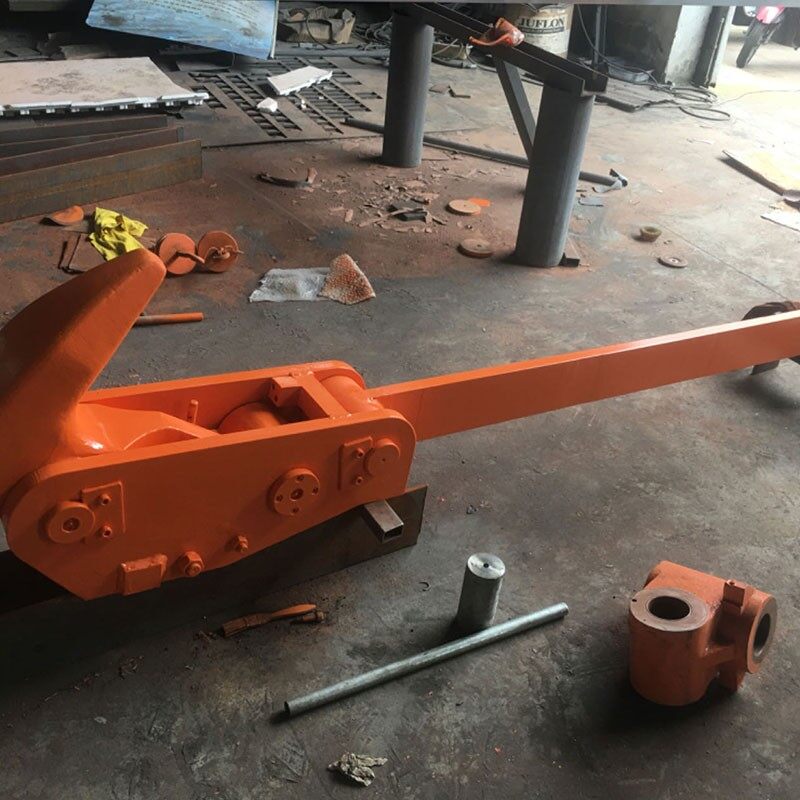
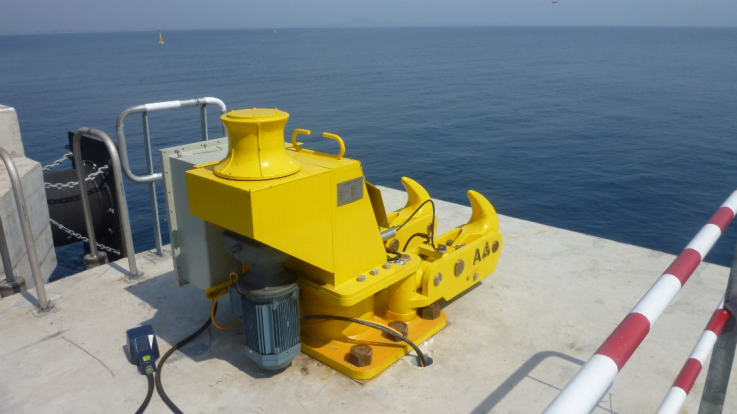
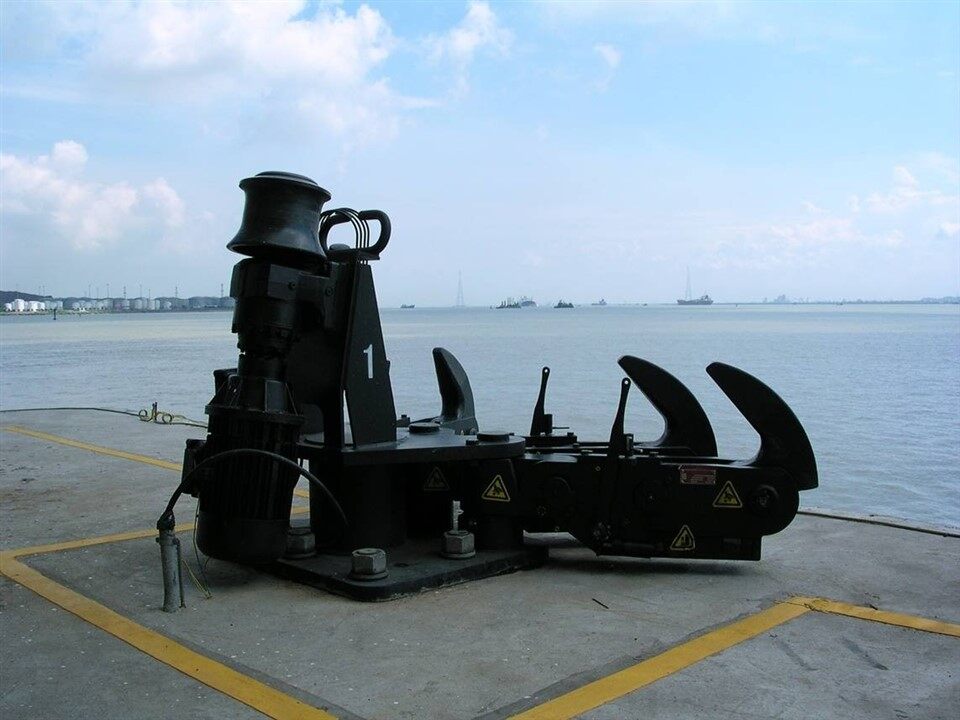
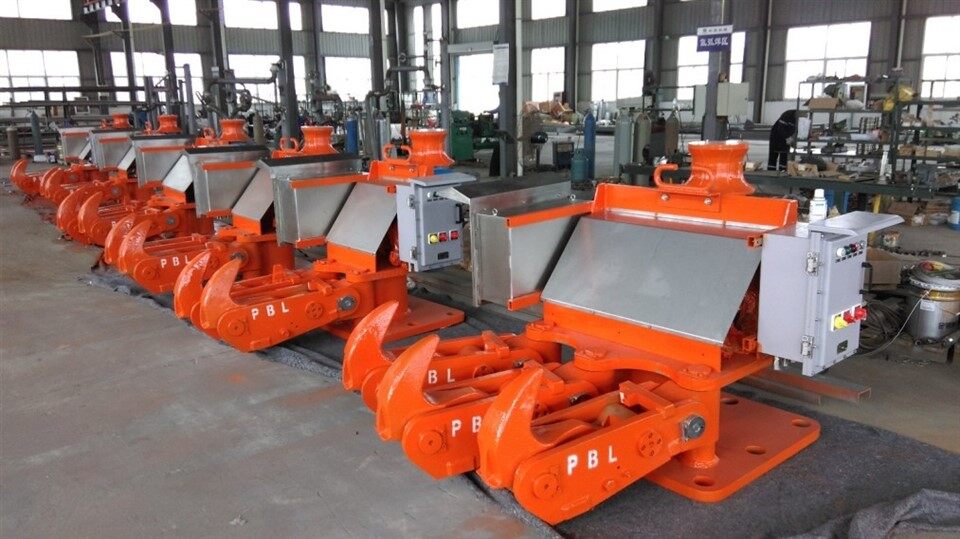
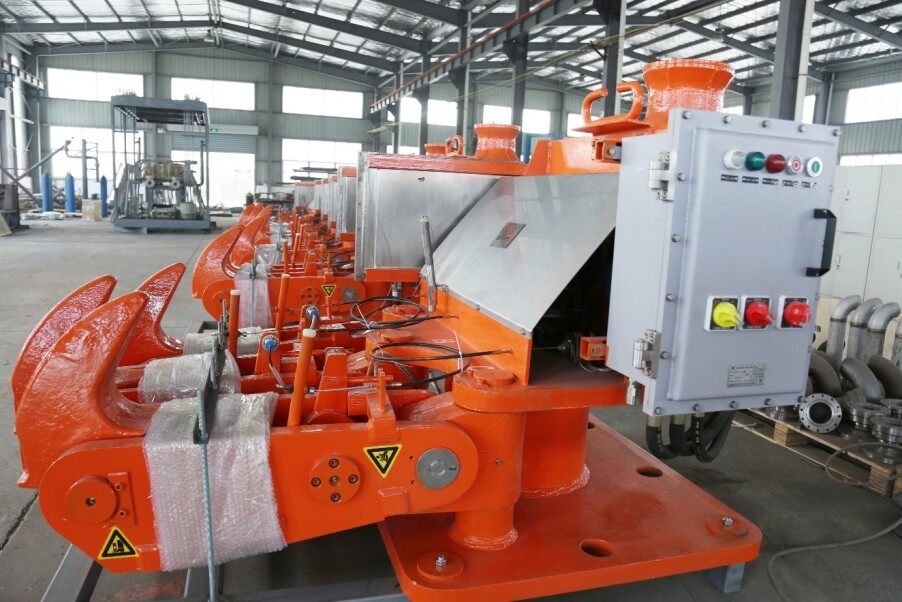
Manual Quick Release Hook
A quick release hook is a specialized device installed on wharves for ship mooring and line handling. It serves as an alternative to the traditional bollard. Compared with bollards, this product not only reduces workers' labor intensity and improves efficiency, but also ensures the safety, reliability, and durability of the wharf.
Main Features
Each hook can be released quickly under rated load.
The operating force required for releasing the hook under full load is less than 17 kg.
The hook head is balance-designed; resetting the hook head and release components requires only one action.
Hooks can withstand loads at horizontal inclinations of less than 55°.
Designed separately for hazardous and non-hazardous areas.
Hooks for hazardous areas feature non-sparking and electrostatic insulation designs.
Quick Release Hook Models
Example: QRH75H2
QRH75H2 indicates a pull rating of 75 tons, manual operation, double-hook type.
Pull rating: 400 kN – 2000 kN
Number of hooks per unit: Single, double, triple, quadruple, or six hooks
Winch pull capacity: 10 kN, 20 kN, 30 kN

Remote Release:
- Operation can be performed via computer (usually integrated with a mooring load monitoring system) or touchscreen.
- Control can also be done through central control room buttons and large display screens.
- The large screen in the control room can display hook open/close status and trigger overload alarms for mooring line tension.
- The remote release system enables local electric or hydraulic release, while still supporting manual release.
- Electric/hydraulic release and manual release mechanisms are relatively independent, ensuring manual release always takes priority.
- Electric release buttons use safety switches (or require simultaneous pressing of two buttons) to prevent accidental release.
Load Monitoring:
- The system uses load measuring pins, amplifiers, and a stress monitoring system to continuously monitor mooring line tension and hook open/close status.
- The load measuring pin installed on the quick release hook acts as a sensor, converting line tension into electrical signals proportional to the load.
- Signals from multiple hooks are sent to a multi-channel digital amplifier, which amplifies and converts them into digital signals suitable for long-distance transmission without accuracy loss, then sent to the main control room interface box.
- The data is processed by software and displayed as bar graphs and digital values for real-time monitoring.
- When installing load measuring pins, the detection direction must always align with the load direction.
- Quick release hooks are equipped with gravity compensation mechanisms to ensure the line contact point and sensor remain aligned, preventing measurement errors caused by additional hook torque.

Wharf Berthing Management System – Main Display:
7. Load results are shown on a high-resolution color display for real-time monitoring.
8. The screen visually displays the wharf layout, moored vessels, actual line arrangements, and line loads.
9. Each mooring line's load is represented by a color-coded vertical bar, with the bar height fluctuating in real time with the load.
10. In cases of overload or slack (underload), the corresponding bar changes color and flashes to draw attention, while the system issues alarms according to set rules.


